
Replace a stopped or ageing machine
Which replacement can connect to the line you already run?
For a failed machine, recurring breakdowns or an ageing unit that is becoming difficult to maintain.
Follow the decision steps ↓
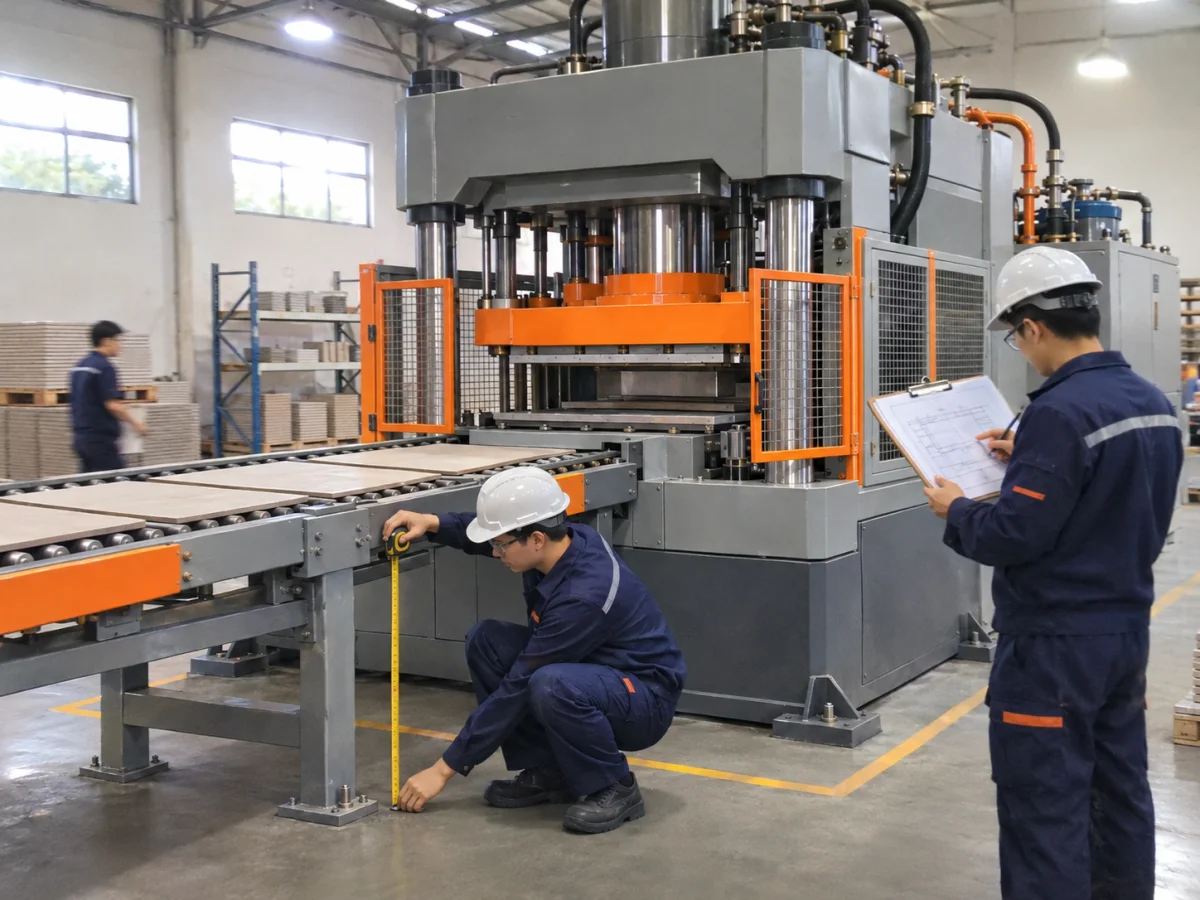
Confirm the problem
Record whether the immediate need is to restore output, reduce failures or replace an unsupported assembly. These lead to different candidate and service requirements.
Check the connections around the replacement
- Existing upstream machine
- Candidate and tooling
- Existing downstream machine
Review transfer height, direction, product handling, utilities and control signals at both boundaries.
Prepare the evidence
Collect these records before narrowing the equipment or service scope.
- Current machine identity, photos and known failure history.
- Tile formats, required output, transfer height and direction.
- Layout, mounting information, utilities and available shutdown window.
Compare approaches
Repair the existing unit
Assess the failed assembly, parts access and the work needed to restore service.
Suitable only if the remaining machine condition and repair scope support the intended duty.
Replace with a used machine
Compare actual interfaces, included accessories and test evidence.
Include adapters, missing parts, controls and changeover work in the comparison.
Replace a detachable module
Check whether the failed function can be separated from the rest of the line.
Confirm mechanical and control boundaries before assuming the module is interchangeable.
Check the limits
- A similar model name does not establish matching interfaces or condition.
- Identify tests that cannot be completed while a candidate is disconnected.
- Include commissioning work and a fallback plan in the shutdown decision.
A replacement shortlist and a list of changes needed before installation.
Find equipment and support
Review relevant equipment
Open the individual equipment records and compare their condition and included scope.
Define the work around the machine
Choose fit checks, inspection, export preparation, installation and acceptance planning for the project.
Choose your service scope →Worked examples for this decision
Prepare your project requirements
Carry this buying task into a brief and add the measurements, equipment references and open questions you have.