
Illustrative procurement scenario
Does the packing line meet your actual output requirement?
For ceramic factory procurement and engineering teams
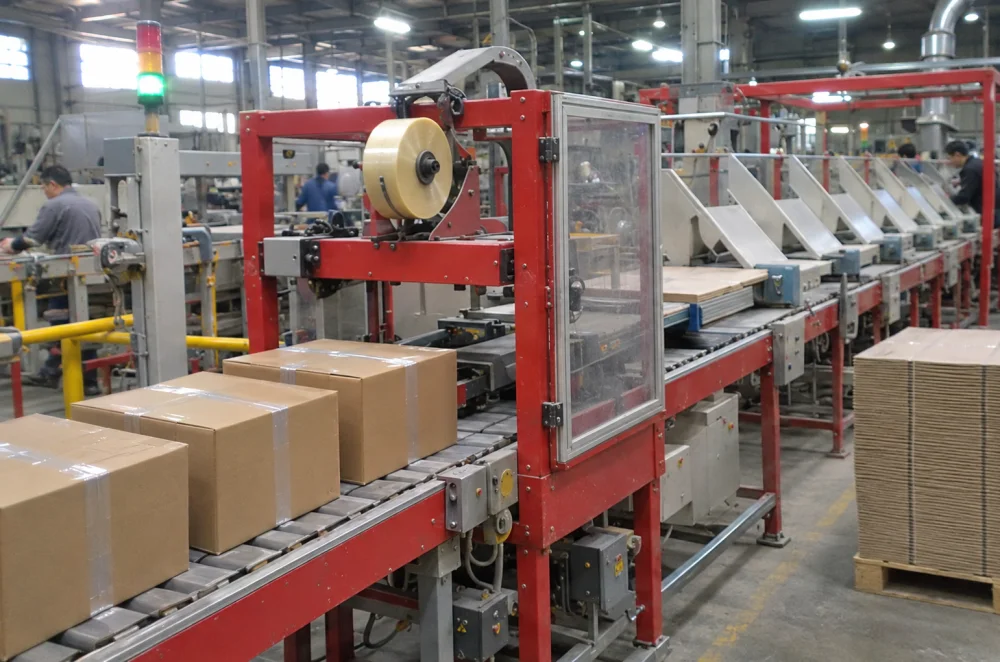
Equipment-family illustration; not the manufacturer’s referenced machine or a CeramBridge project record.
The procurement question
An installer is reviewing a packing replacement for 600 × 600 mm tiles, four tiles per pack, with a required net output of 600 m²/h. All buyer inputs in this example are assumed.
System Ceramics describes Multiflex at up to 9 packages per minute. This is a published machine-specific maximum, not an inspected used-machine result.
System Ceramics · Multiflex, 21 April 2022 ↗Source reviewed 4 November 2026. Verify the candidate’s model, version and condition separately.
Make the inputs visible
Swipe the worksheet to compare all columns.
| Input or check | Calculation · assumed buyer inputs | Result |
|---|---|---|
| Area per tile | 0.6 × 0.6 | 0.36 m² |
| Area per pack | 0.36 × 4 tiles | 1.44 m² |
| Theoretical output at published maximum | 9 × 60 × 1.44 | 777.6 m²/h |
| Illustrative effective output at an assumed 70% effective output factor | 777.6 × 0.70 | 544.32 m²/h |
| Factor needed for the assumed 600 m²/h target | 600 ÷ 777.6 | 77.16% |
The assumed effective output factor combines stops, speed losses and rejects. At 70%, this configuration falls short. Do not approve it from the brochure speed alone. Measure stops, changeovers and actual packs per minute with the intended tile stack and carton.
Evidence before a recommendation
- Timed trial with the intended cartons, tile stack and product mix
- A record of jams, rejected packs, changeovers and operator interventions
- Included carton tooling, controls, guards and upstream/downstream interfaces
Agree the local and sourcing roles
The local installer measures the current bottleneck and site interfaces. The China-side sourcing review requests candidate identity, test access and included modules. The factory approves the acceptance target.
Explore project collaboration →Apply this review to your project
Start with the facts you have; identify the checks still needed.