
Illustrative procurement scenario
What must be checked before an energy retrofit?
For ceramic factory procurement and engineering teams
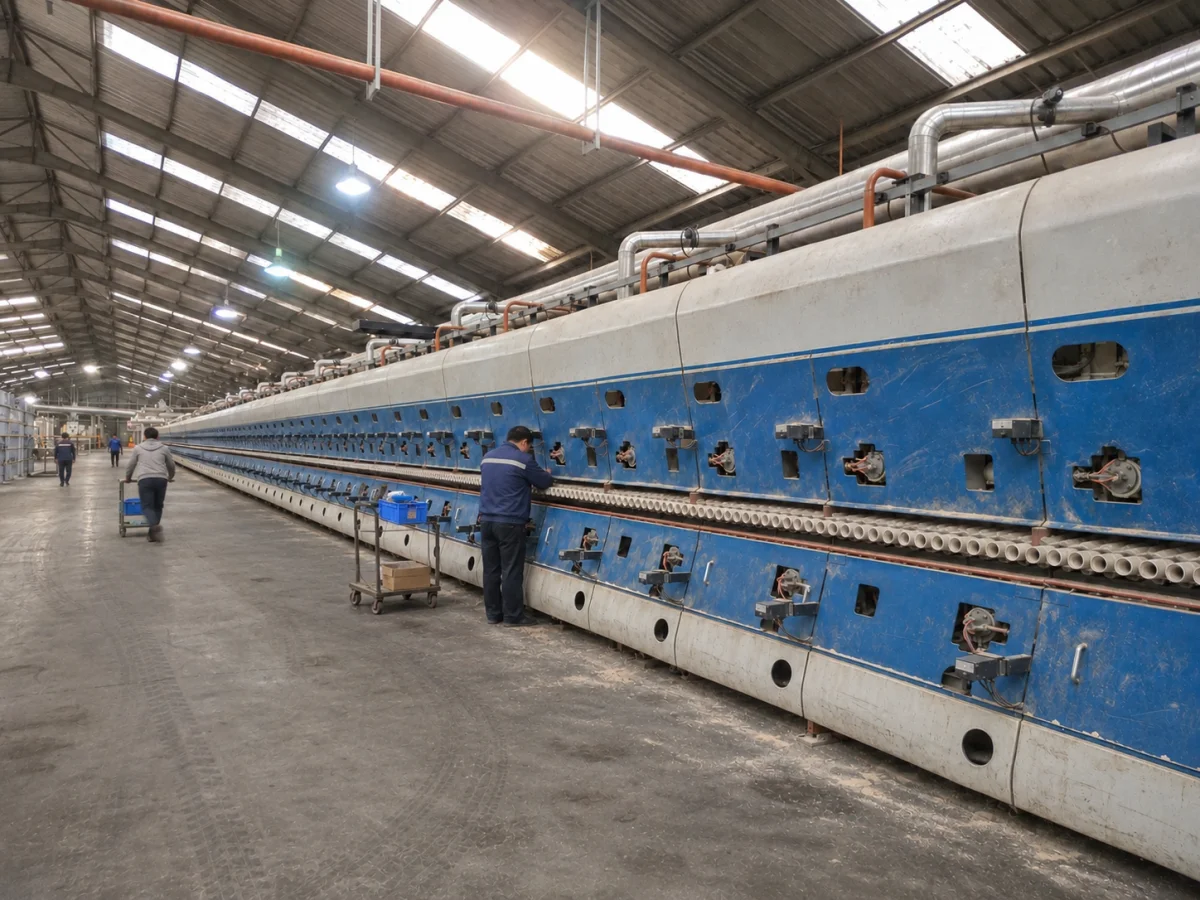
Equipment-family illustration; not the manufacturer’s referenced machine or a CeramBridge project record.
The procurement question
Assume a sprayer gas baseline of 10,000 Nm³/day for an engineering worksheet. No gas tariff, fuel quality or equipment suitability is assumed to be verified.
SACMI states up to 20% gas reduction for its sprayer connection to kiln heat recovery, and describes a feasibility study, piping and automation integration. The figure applies to that solution, not an entire factory or a generic used fan.
SACMI · Heat Recovery revamping sheet, 2024 ↗Source reviewed 4 November 2026. Verify the candidate’s model, version and condition separately.
Make the inputs visible
Swipe the worksheet to compare all columns.
| Input or check | Calculation · assumed buyer inputs | Result |
|---|---|---|
| Illustrative 5% sensitivity | 10,000 × 0.05 | 500 Nm³/day |
| Illustrative 10% sensitivity | 10,000 × 0.10 | 1,000 Nm³/day |
| Published ceiling applied only as an illustration | 10,000 × 0.20 | 2,000 Nm³/day |
These are sensitivities, not forecasts. Confirm available waste heat, operating overlap, process demand, duct losses and controls before estimating savings. Define the sprayer boundary and comparable measurement conditions; do not advertise the ceiling as a guaranteed outcome.
Evidence before a recommendation
- Measured gas use and production baseline at comparable operating conditions
- Waste-heat temperature, flow, contamination and operating hours
- Duct route, fan duty, controls integration and engineering feasibility
- Installed cost, maintenance scope and agreed measurement method
Agree the local and sourcing roles
The local thermal specialist surveys the plant and defines the baseline. Engineering feasibility and supplier scope precede equipment sourcing. A complete kiln is outside the current catalogue.
Explore project collaboration →Apply this review to your project
Start with the facts you have; identify the checks still needed.